

AI is already part of many lawyers' drafting workflows, whether firms admit it or not. It's fast, helpful, and increasingly hard to avoid.
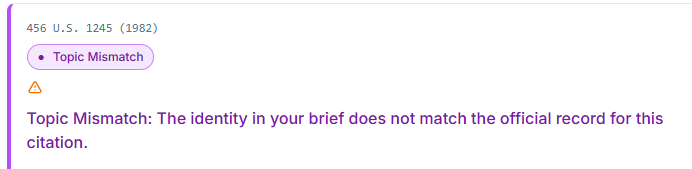
It also confidently invents cases that look real enough to make it into a filed brief.
If you look at recent sanctions stories, the pattern is consistent:
- A lawyer uses ChatGPT or another LLM to help draft
- The model inserts citations and quotes
- The lawyer doesn't verify each one against the actual opinion
- The court (or opposing counsel) finds a case that doesn't exist, or a quote that isn't there
AI didn't get those lawyers sanctioned. Skipping verification did.
Where AI Helps, and Where It Doesn't
AI is good at:
- Turning outlines into readable prose
- Summarizing long materials
- Cleaning up structure and tone
AI is not good at:
- Being a source of truth
- Verifying that a citation actually exists
- Confirming that quoted language appears in the opinion
For that, you need the record.
A Simple Extra Step: Check Against the Record
We built a free, focused tool: GhostCite.
It doesn't draft. It doesn't summarize. It just verifies.
- Reads your brief, motion, or memo
- Extracts citations and quoted text
- Pulls underlying opinions from public sources like CourtListener
- Flags:
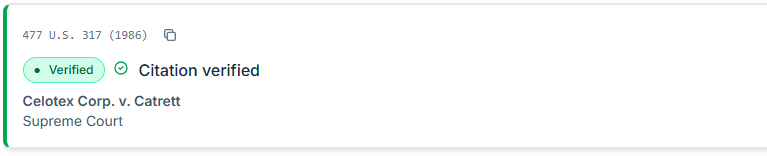
- Citations that resolve cleanly
- Citations that don't match any case
- Quotes it can't find at the cited location
There's no AI in the loop. No guessing. If something doesn't match the record, it tells you clearly.
What the tool shows you
A Workflow You Can Defend
Use whatever tools you want to draft. Just make sure your workflow ends like this:
- Research normally
- Draft (AI or not)
- Do your own review
- Verify citations and quotes against the record (e.g., GhostCite)
- Shepardize/KeyCite, then file
Here's the key distinction:
Shepardize/KeyCite tell you if your law is still good.
GhostCite tells you if it was ever real in the first place.
You want both.
What This Lets You Say, With a Straight Face
"We used AI for drafting. We then verified all citations and quoted language against primary law and checked validity using a citator."
That's a defensible workflow, to a partner or a judge.
Try It
It's free. No accounts required.
Paste a section of something you've already filed into courtrecordchecker.com and see what shows up.
You may be surprised how often small issues slip through.